Key Takeaways:
- Print marketing still outperforms digital ads in recall and trust — 80% higher recall rate and 3x longer engagement time with physical materials.
- A brochure's first impression is formed before a single word is read — paper quality, layout, and colour do the selling first.
- Bi-fold, tri-fold, gate-fold, and multi-page formats each serve different goals; choosing the right one matters.
- Six core design elements — typography, colour, imagery, layout, CTA, and print finish — determine whether a brochure converts or gets discarded.
- QR codes, AR integration, and trackable URLs are turning printed brochures into measurable lead generation tools.
- Five common mistakes that kill brochure effectiveness are covered, along with how to avoid each one.
- Upcoming trends including hyper-personalisation, sustainable materials, and digital-print unified systems are explained.
In a fast-moving digital world, it is easy to overlook the marketing tools that have stood the test of time. Yet one asset continues to deliver remarkable results for businesses of every size — the professionally designed brochure. Whether placed on a counter, handed at an event, or mailed to a prospect, a high-quality brochure creates an immediate, tangible connection that digital content struggles to match. Businesses that invest in expert
Brochures Design Services gain a powerful tool that communicates credibility, tells their story, and converts interest into action. This guide explores why brochure design still matters in 2026, what makes a brochure truly effective, and how the right design partner can transform your print marketing results.
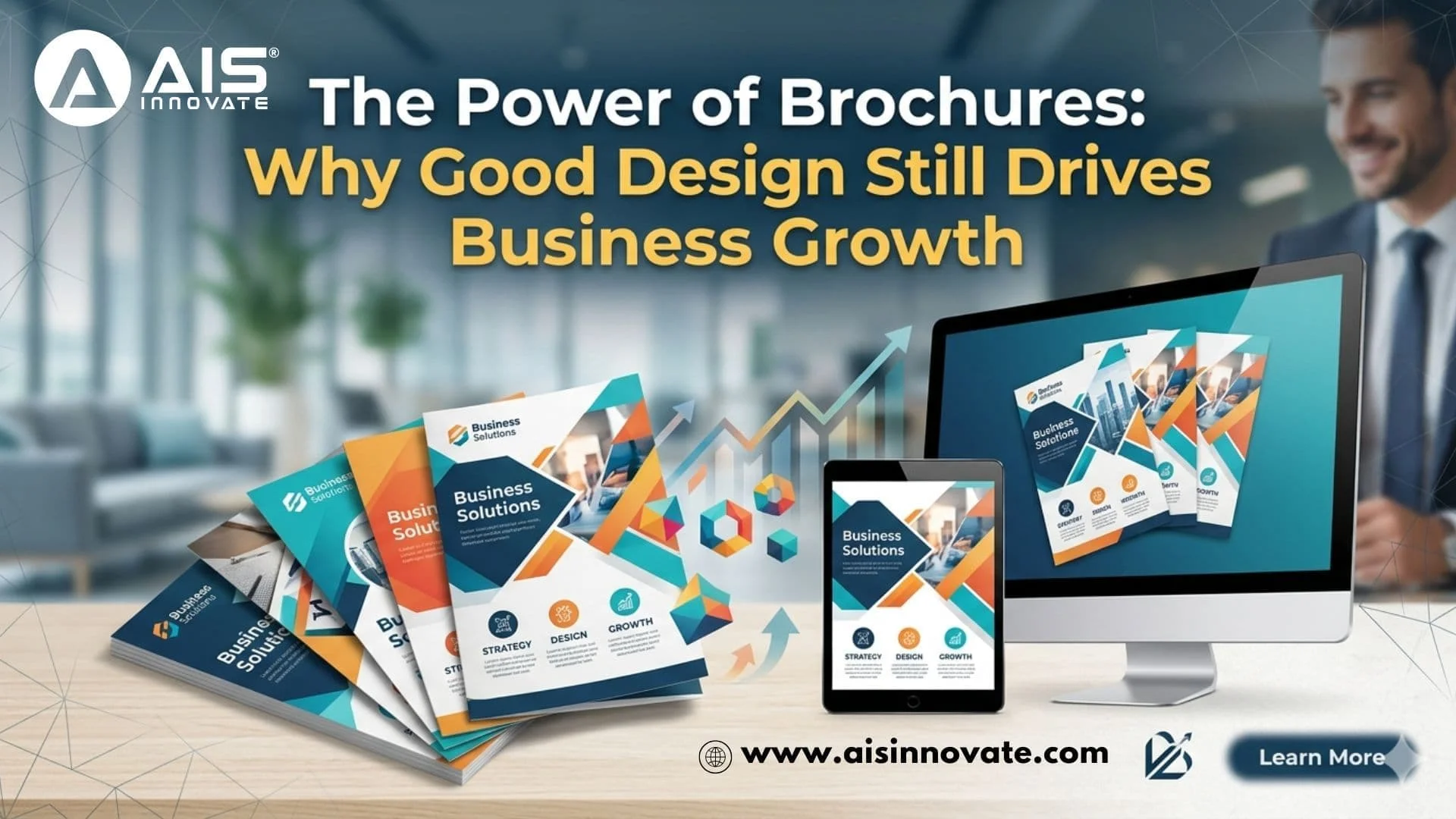
A business brochure is a folded or bound printed document that presents a company's products, services, values, or expertise in a concise, visually engaging format. Unlike a flyer, which is single-page and promotional, a brochure provides depth — giving potential clients enough information to make informed decisions while also inspiring curiosity and building trust.
Brochures come in many formats: bi-fold, tri-fold, z-fold, gate-fold, and multi-page booklets. Each format suits different communication goals. A tri-fold works well for service overviews; a gate-fold creates a premium unboxing-style experience perfect for luxury brands or product launches.
A well-designed brochure is not just a marketing document — it is a physical representation of your brand’s commitment to quality and professionalism.
With so much marketing budget flowing into digital channels, print might seem like an afterthought. But the data tells a different story. Physical print marketing materials consistently outperform digital ads in terms of recall, trust, and engagement time. Consumers are experiencing digital fatigue — bombarded by thousands of online messages daily, yet a well-designed brochure placed in their hands commands undivided attention.
Key statistics supporting print in 2026
- 70% of consumers feel print marketing is more personal than digital advertising
- 80% higher recall rate for print vs digital-only campaigns
- 3x longer engagement time with physical marketing materials
- 64% of customers visit a brand's website after receiving a printed piece
In 2026, the brands that are winning are not choosing between print and digital — they are using both strategically. A brochure bridges the physical and digital worlds, often including QR codes, NFC chips, or personalised URLs that drive offline readers into online funnels.
Trust is the foundation of every purchase decision. When a prospect picks up your brochure, they form an opinion about your business within seconds — before reading a single word. That first impression is shaped entirely by design: the quality of the paper, the coherence of the layout, the choice of colours, and the sophistication of the typography. A professionally crafted brand awareness brochure signals that your business invests in quality at every level. Premium Brochures Design Services ensure that every visual element works together to project confidence, credibility, and authority.
Consistency across all brand touch points
Great brochure design never exists in isolation. It aligns perfectly with your website, social media presence, business cards, and signage, reinforcing a consistent brand identity that customers learn to recognise and trust across every interaction.
Not all brochures are created equal. The best ones share a set of core design principles that transform a piece of print into a persuasive sales tool.
- Strategic Typography — Font pairings and hierarchy that guide the reader naturally through your content
- Brand-Aligned Colour — An intentional palette that reinforces brand identity and creates the right emotional tone
- Curated Imagery — High-quality, on-brand visuals that communicate faster than words
- Clean Layout — White space, grids, and visual flow that prevent clutter and aid comfortable reading
- Compelling Call to Action — Clear CTAs that direct the reader to take the next step immediately
- Quality Print Finish — Paper weight, coating, and binding choices that reflect your brand's premium positioning
The honest answer: neither is universally superior. Both formats serve distinct roles in a balanced marketing strategy. Professional brochure design adapted for digital formats — PDF, interactive flipbook, or web-embedded — extends your reach to remote audiences and supports email campaigns. Printed brochures, meanwhile, create tactile experiences that digital versions simply cannot replicate, making them more memorable and more persuasive in face-to-face situations.
The ideal approach is a unified design delivered in both formats: a premium printed version for events and meetings, and a digital version for email campaigns and website downloads.
Even with a clear brief, brochures can fall flat when common design mistakes go unchecked. Being aware of these pitfalls is the first step toward avoiding them.
- Overcrowding content — Trying to fit everything onto every panel results in visual chaos. Effective brochures prioritise the most important messages and leave breathing room.
- Poor image quality — Low-resolution images print with visible pixelation, instantly undermining your brand's professionalism.
- Inconsistent fonts and colours — Using too many typefaces or off-brand colours creates confusion and dilutes brand recognition.
- No clear call to action — A brochure without a CTA leaves the reader with no next step, wasting the engagement you earned.
- Ignoring print specifications — Designing without understanding bleed, trim, and safe zones leads to costly reprints and delays.
Brochures are not passive documents — when designed strategically, they are active lead generation tools. By leading the reader through a carefully structured journey, a well-designed brochure mirrors the sales process itself. Including QR codes linked to landing pages, promotional offers, or video content transforms a static print marketing materials piece into an interactive experience. Trackable URLs allow you to measure exactly how many brochure recipients visit your website, making ROI calculation straightforward.
Brochures also work powerfully at the bottom of the sales funnel, where a physical leave-behind after a client meeting can be the deciding factor between a conversion and a lost opportunity. Paired with custom brochure printing that reflects premium quality, your brochure becomes the last impression that stays on a decision-maker's desk.
DIY design tools have made it tempting for businesses to create their own brochures. But the gap between a self-designed brochure and one produced by an expert is immediately visible — and that gap has real commercial consequences. Professional Brochures Design Services bring strategic thinking, creative expertise, print production knowledge, and brand consistency to every project.
Expert designers understand how to balance visual impact with clear communication, how to choose the right format and paper stock, and how to ensure the finished piece aligns with your broader marketing strategy. They also manage the technical side of print production: colour profiles, bleed settings, file formats, and supplier relationships. The result is a finished product that looks as good in print as it does on screen — every single time.
When evaluating a design partner, look beyond their portfolio. Ask about their process, their understanding of your audience, and their experience managing print production end-to-end.
Brochure design continues to evolve, blending traditional print craftsmanship with modern technology and sustainability values.
1. QR & AR integration
Brochures that unlock video, 3D product models, or interactive demos via smartphone are becoming standard in forward-thinking industries. This merges the trust of print with the depth of digital.
2. Sustainable materials
Recycled stocks, soy-based inks, and carbon-neutral printing are gaining mainstream adoption as brands respond to consumer demand for environmental responsibility.
3. Hyper-personalisation
Variable data printing allows businesses to tailor content — names, offers, and imagery — to individual recipients at scale, dramatically improving response rates.
4. Minimalist luxury
Refined white space, tactile finishes such as soft-touch lamination and foil, and restrained colour palettes are becoming the signature of premium brand brochures.
5. Digital-print integration
Unified brochure systems designed simultaneously for print and interactive digital formats are replacing the old approach of designing for one medium and converting for another. Leading professional brochure design studios now produce master files that output perfectly to both.
6. Bold editorial layouts
Magazine-inspired grids, oversized typography, and unexpected image cropping are making brochures worthy of display — objects people keep rather than discard.
In an age of digital overload, a beautifully designed brochure cuts through the noise in a way no banner ad or social post can. It is tangible, trustworthy, and enduring. Whether you are launching a new service, attending a trade show, or nurturing prospects through a complex sales cycle, investing in professional Brochures Design Services delivers a return that is both measurable and lasting. The right brochure tells your story, builds your credibility, and stays with your audience long after every digital impression has been forgotten.
LET'S DISCUSS YOUR IDEAS
Transform your online presence with result-driven digital marketing services. Let our team create customized campaigns that bring measurable growth to your business.
Get Started





 11 March 2024